
mobile money api
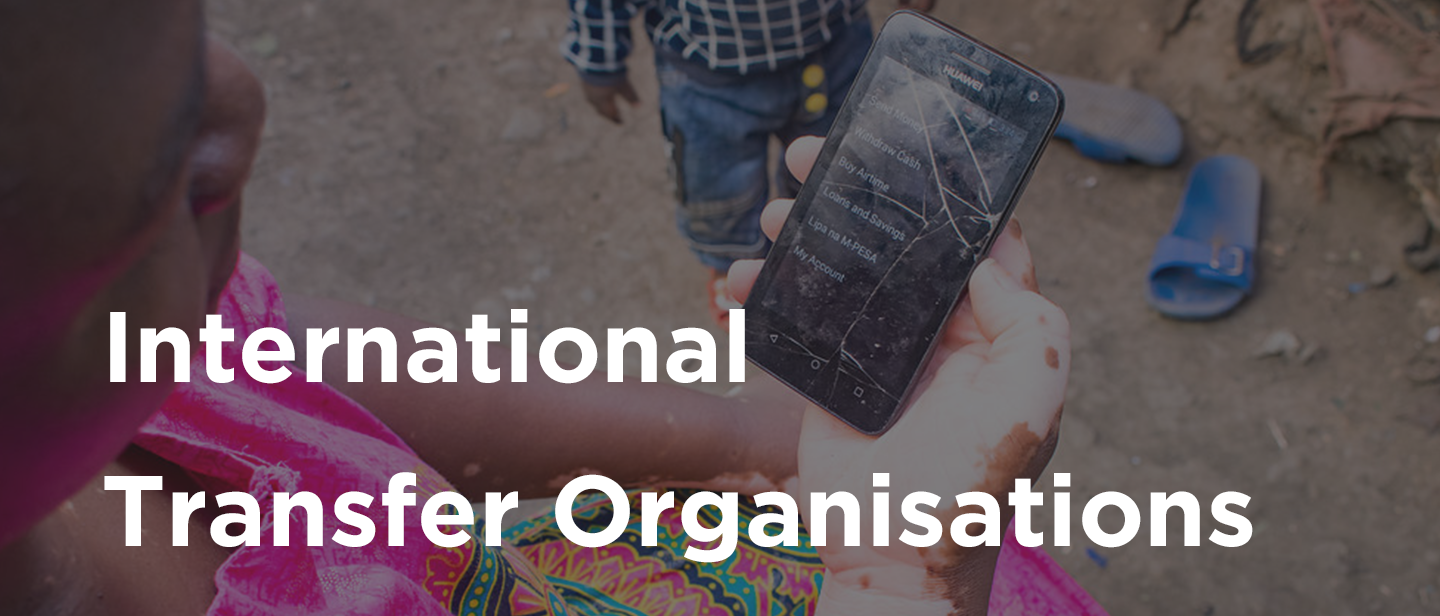
Organisations involved in transferring money across international borders such as remittance service providers rely on partnerships with mobile money providers.
The GSMA Mobile Money Specification can be used by international transfer organisations to integrate with mobile money wallets for a quick and easy pay-out channel for their customer’s recipients.
The International Transfer Mobile Money APIs allow financial service providers to perform cross-border mobile money transfers, including remittances.
For further reading, please refer to the following:
All documentation can be found on the GSMA Mobile Money API Developer Portal.
| Audience | Usage | Role |
|---|---|---|
| FSP - Mobile Money Providers | - To understand how to implement the Mobile Money API to receive International transfers from other FSPs. | API Provider |
| - To understand how to implement the Mobile Money API to send international transfers to other FSPs. | API Consumer | |
| FSP – International Remittance Organisations | - To understand how to implement the Mobile Money API to receive international remittances from Mobile Money Providers. | API Provider |
| - To understand how to implement the Mobile Money API to send international remittances to Mobile Money Providers. | API Consumer | |
| International Transfer Hubs | - To understand how to implement the Mobile Money APIs to receive international transfers from FSPs. | API Provider |
| - To understand how to implement the Mobile Money APIs to send international transfers to FSPs. | API Consumer |
In this diagram, a hub is used by the sending FSP to obtain a quotation and perform the transfer with the receiving FSP. A callback is provided by the receiving FSP to return the quotation and the confirmation of the transfer.
This flow can also be used for bilateral international transfers.
In this diagram, the sending FSP connects directly with the receiving FSP to obtain a quotation and to perform the transfer. A callback is provided by the receiving FSP to return confirmation of the transfer.
The failure of a transfer is reflected by the return of an error object in the callback from the receiving FSP. The same pattern would also apply to a quotation failure.
In some failure scenarios, a transfer may need to be reversed. This diagram illustrates an reversal with the final result communicated via the callback.
This diagram illustrates use of a cursor mechanism to retrieve all transactions for a sending FSP via multiple requests.
The Heartbeat API is used for monitoring purposes and establishes whether the FSP is in a state that enables a client to submit a request for processing.
This API can be used by the sending FSP to retrieve a link to the final representation of the resource for which it attempted to create. Use this API when a callback is not received from the receiving FSP.
The remittance provider completed its first direct integration with an MNO six years ago, and now currently integrated with multiple MNO partners. According to the provider, the direct API Integrations offer a higher level of convenience as the recipients do not have to go to physical locations to cash out. During the pandemic, it was difficult for some to access agents or banks and direct integrations speeded remittance transactions to end users.
Challenges
The organisation is currently looking to increase its MNO integration partners; however, some challenges are slowing down the speed of expansion. Recently, it experienced a length integration with a provider, taking nearly two years to complete.
Opportunities
Integrating with more providers will increase the reach of users. A Standardised API would be beneficial for the organisation as it will allow integrations with multiple MMPs in a seamless manner.

Mama Money