
mobile money api
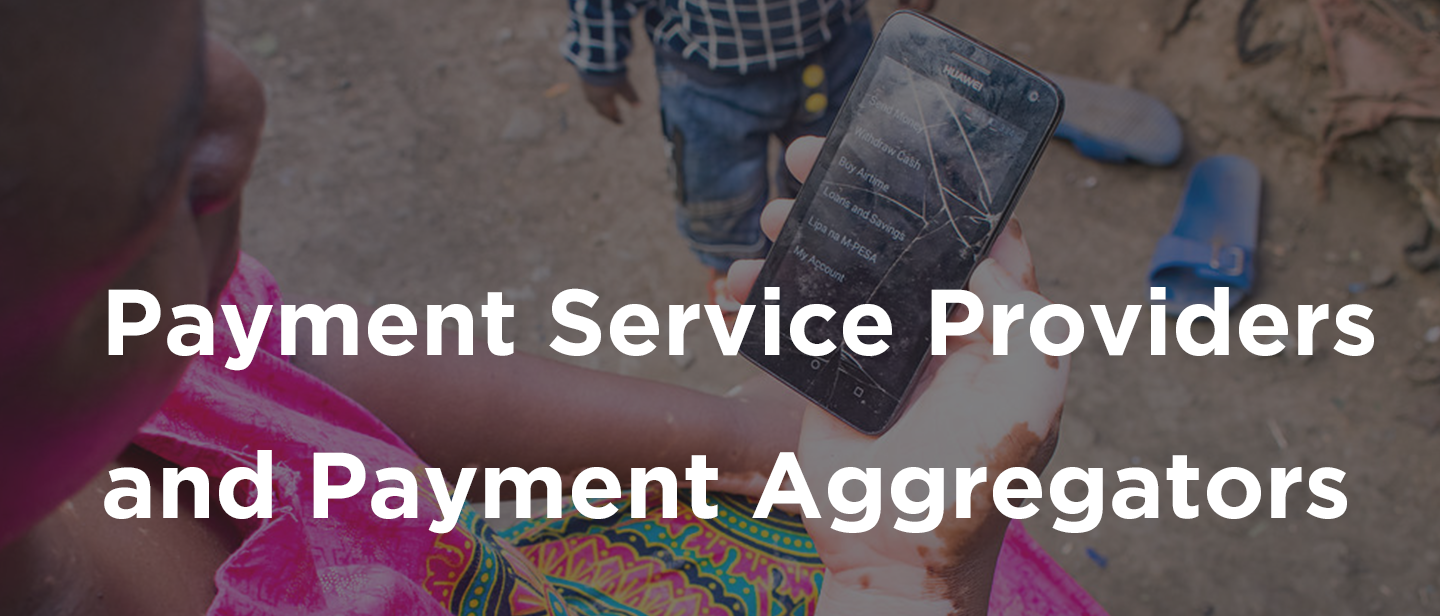
Providers of payment services such as aggregators and hub that act as mediators. They help connect organisations with many other organisations using a single connection point.
The GSMA API Specification can be used by payment aggregators and hubs to speed up the integration time and simplify the complexity when working at large scale with multiple APIs.
The P2P Transfer Mobile Money APIs allow financial service providers (FSPs) to transfer funds from an account holding individual to another account holding individual or to a non-account holding individual (known as an unregistered customer). The API supports a wide number of financial service providers including mobile money providers, banks, and micro-finance institutions. The API supports ‘on-us’ P2P transfers (both accounts held within one FSP) and ‘off-us’ P2P transfers (accounts held in different FSPs). Bilateral and Switch-based transfers can be supported.
For further reading, please refer to the following:
All documentation can be found on the GSMA Mobile Money API Developer Portal.
In this diagram, a switch is used by the sending FSP to (1) confirm the recipient name, (2) request a quotation and and to (3) perform the transfer with the receiving FSP. A callback is provided by the receiving FSP to return confirmation of the transfer.
In this diagram, the sending FSP connects directly with the receiving FSP to confirm the recipient name and to perform the transfer. A callback is provided by the receiving FSP to return confirmation of the transfer. In this example, a quotation is not requested.
In this diagram, A third party provider enables a sender to transfer money to a recipient in the same FSP. The third party provider (1) confirms the recipient name, (2) requests a quotation and (3) performs the transfer with the FSP. A callback is provided by the FSP to return confirmation of the transfer.
In some failure scenarios, a transfer may need to be reversed. This diagram illustrates an reversal with the final result communicated via the callback.
In some failure scenarios, a transfer may need to be reversed. This diagram illustrates an reversal with the final result communicated via the callback.
This diagram illustrates use of a cursor mechanism to retrieve all transactions for a sending requesting FSP via multiple requests.
The Heartbeat API is used for monitoring purposes and establishes whether the FSP is in a state that enables a client to submit a request for processing.
This API can be used by the sending FSP to retrieve a link to the final representation of the resource for which it attempted to create. Use this API when a callback is not received from the receiving FSP.